on being an expatriate

Having written a few poems now reflecting life from an expat’s point of view (and I might add, not necessarily mine), I thought it might be time to weigh in myself and talk from my own perspective.
First, though, I must clarify what I see as three distinct types of ex-pats: the first being the ones who fell in love with a foreign country while visiting it and decided to uproot themselves and move there; the second being those people referred to as “backpackers” who have a sense of wanderlust and are essentially going from country to country, living and working in each for a specific amount of time till that wanderlust kicks in again and they are off to another country and another series of adventures; and the third are those that really have no opportunities in their home country and have heard they can make a living by teaching in foreign countries since they are native speakers and thus have a value in a foreign country they do not have in their own country because they possess nothing intrinsically special except they can speak and write in English. They even, in some cases, believe they are experts themselves and develop a sense of entitlement (bordering on arrogance) about their worth.

The third group does not interest me, the second group I envy for their youth and sense of adventure (wishing I had been able to do that at their age but the turbulent 60s got in the way), but the first group, well these people I understand for there is much to fall in love with in countries outside the US, and even much to prefer: a sense of history, respect for education and educators, the lure of the exotic, and an opening of the mind, the heart to other lives, other cultures far more interesting than one’s own.

I, unfortunately, do not fit comfortably into any of those categories, though I do have more in common with the first group, but have other reasons for the self-imposed exile, as a friend calls it, that I find myself in. However, that isn’t what I have chosen to write about. Instead, I find myself thinking about what it feels like, for me, to be here.

The hardest part is being away from friends and family, people who know you for who you really are and who you have shared values, interests, experiences with. The people at work, for instance, are always texting or checking their facebook accounts or email on their smartphones even while supposedly conversing with you. And there you sit, with a dumbphone, no one to text or to be texted from, and emails are 7 to 10 hours away. As you watch their fingers glide over the keys of their phones, you feel immense sadness settle in. You long for someone to talk to about the things that matter to you, about art, literature, poetry, film, music, beyond the world you are in because your reference points are so much broader than the space you find yourself confined in. You envy them, but also know you cannot be them. You will always be a foreigner in this land. Always the other, condemned to not belong.

You find the one place you are most comfortable is your neighborhood. There are few people there that speak English but somehow you communicate with your limited Turkish, their limited English, and sign language on both sides. There are genuine smiles, looks of recognition, warmth from your barber and his assistant, the waiters at your favorite restaurants, the dry cleaner, the two guys who help you when you go to buy CDs at your local music store, Hakan at your DVD store, the vet for your cat, the pet shop owner and his friends who work there, the people at Rind where you get the bottles of alcohol when the need arises, the people in the pharmacy you go to regularly, the men behind the counter at the two groceries you frequent, the owners of the restaurants on your block where you get take-out meals and where, on Maureen’s first night in Istanbul you sat with her and ate anchovies, salad, drank raki and watched her share a cigarette with the two guys who wanted so desperately to connect, and it’s here, in this grid of blocks that you wander, that you feel at home, that you forget you are an alien on another planet, in another time, far, far from wherever it was you were and from wherever it is you are headed. But at least, for the moment, you breathe in air that feels right and there is peace, momentarily, in your heart.

So here I am, both in and outside this city, this country, this culture. I understand much of what I see, have read the history and though the names, like all names foreign to our tongues, are difficult to remember and at times impossible to pronounce, I still find there is so much more to learn, to grow accustomed to. At work I say half seriously that I’ll change my name if and when I become a citizen to a Turkish name: Levent. And I say half seriously because I am half certain of my future. At times I think of getting a place in a Black Sea town because apart from Izmir, that is the one place I think I could settle. There’s something about the people I identify with, though perhaps it’s the Calabrese half of me that identifies with them and the half from Salerno that feels most comfortable in Izmir. But like those two opposite halves, I am split, am always divided between things, places, lives. The writer/educator, the city dweller who longs to live by the sea, the cat owner who misses his dog, the solitary man who misses the company of his friends, the New Yorker who longed to return to California, the expatriate who still hasn’t quite found a home. I can renounce a country but I find I still can’t quite embrace one. The expats who adjust here best are those that marry into the culture, that have Turkish wives or husbands, new adopted families, children, a home. And that has always been something lacking in my life since those Sunday dinners of my youth.

There are probably four neighborhoods in my entire life I’ve felt most comfortable in: the Upper West Side of Manhattan, Santa Monica, CA, Sunnyside, Queens, and here in Moda. Yet as comfortable as I feel, there has always been something missing, which probably explains why I spent so much time in my younger days moving around. My mother would complain I took up too many pages in her address book but I just couldn’t find the right neighborhood, the mix of people, places, restaurants, pizza parlors, and bookstores to make me feel comfortable. I did in two of those neighborhoods I mentioned: the Upper West Side of Manhattan & Santa Monica, CA, but in Manhattan I had the first bookstore I worked in, 3 very close friends within a 5 block radius of my apartment, Central Park half a block away for my dog, and two of my brothers within walking distance, well 80 blocks away but still within walking distance, and in Santa Monica I had 5 very close friends nearby, my bookstore which was my second home, and the Airlane Bar and Tampico Tilly’s across the street. I mean, both places were like heaven. Sunnyside was different but I had my car and drove everywhere and the apartment was big, the top floor of a house, and I was only a few blocks from the Long Island Expressway and only a few subway stops outside Manhattan. And Moda, well I already described Moda, and the only thing lacking here is an English language bookstore. My fantasy is maybe one day I’ll open up one here and give this teaching thing a rest.

But back to being an expat. I think maybe I’ve always been an expat but just didn’t know it. I was always living somewhere else even when I wasn’t physically but was in my head. And my heart was sort of looking around, scoping out the terrain, thinking maybe here, or maybe over there, or collecting boxes to start packing up again. Maybe being an expat is really a frame of mind. That mindset that hasn’t quite settled into being a resident, a citizen, of finally saying this is home now. I’m settled. So until I do find that place where I hang up my shingle for good, then I’ll continue to be an expat. Without a country, searching for a place to belong.

The ELI (English Language Institute)

nassau group copy0The ELI ( The English Language Institute) was the last thing I created that had any real meaning for me. It was the culmination of 20 plus years devoting my life to immigrants & foreign students and there were many battles fought in that war, a war I eventually lost, but not one I regret waging. There were many successes, and many people I helped toward a better life, but ultimately, like all those other campaigns I found myself on, those crusades that have taken up so much of my adult life, it left me worn out. I haven’t always known how to write about those years, just like I haven’t really written about the boy scouts in my fiction (just a piece of journalism that ended up in a textbook once a long, long time ago), only the bookstore was turned into an earlier novel that my agent couldn’t sell (big surprise there) but did end up in a piece of journalism by Ren Weschler first in the LA Reader, then in two compilations of his throughout his publishing career. I used the ELI as a backdrop (partly anyway) in my novel Night & Day (which is on kindle at amazon) but that book is really a retelling of A Midsummer Night’s Dream and not about the ELI per se. No, it is still perhaps too raw in my heart and mind, too complex, too many stories that could be told, my living fiction, as I used to refer to it, that I can only now try to write about it in this, my on-going personal narrative.

How it started. Well, first a little background. My college, the third largest (at that time) college in NY (only NYU & SUNY/Buffalo had more students) was also the largest 2 year college in NY, the third ranked academically of all 2 year colleges in the US, and it also had the third largest graduating class of any 2 year college in the US, even though we were 86 in terms of size among the 2 year colleges in the country. All this is probably not true anymore since the college has undergone some traumatic changes in the last several years. But then, we were something to be proud of.

Anyway the VP for Academic Affairs, the second most powerful man on campus and my boss, wanted to have an ELI so he created a committee made up of members from the three departments that offered ESL (English as a Second Language) classes: English (Writing), Reading (Reading), and Communications (Speaking/Listening). There were supposed to be 2 members from each department plus me since I was the ESL Program Coordinator responsible for testing and advisement of all foreign born students on campus. As it turned out, only one person from English applied to be a member. The others didn’t think the college was paying enough to be on the committee (I should note here that very few people on that campus, as is true of most colleges/universities in America, do ANYTHING without getting some sort of compensation). So there were 6 of us: 2 from Reading, 2 from Communications, 1 from English, and me. And as most committees go, we spent months talking but accomplishing very little. I, of course, having a low tolerance for committee work to begin with, found myself skipping meetings and daydreaming during the ones I attended. It’s not that I’m against people having opinions, it’s just that I’m task-oriented and want to get the job done. So spring rolled around and we were no closer to having devised a plan of action, but did have a series of recommendations which I, as the ESL Coordinator, had to hand in to the Dean of Students. It would have ended there, another report given and filed away in a drawer except for the fact that I wanted to establish one as badly as the VP, so I went to him privately and said, “You want this ELI?”
“Yes,” he said.
“Then give me carte blanche for a year and I’ll give you one.”
And so my mission began in April of 2000.

By June, I had 38 students registered in a couple of classes for the summer through Continuing Education so I didn’t have to deal with either union (we had both a full-time employees union and a part-time employees union who were always bickering among themselves) or, for that matter, get any necessary approval from the Academic Senate and be bogged down in committees again. Then that fall, when we officially were able to issue I-20s for international students, the ELI exploded with over 300 students in morning, evening, and weekend classes. And from that fall, it continued to grow, ultimately, at its peak before the aftermath of 9/11 adversely affected the number of international students that could come to study in the US, to over 1200 students. There were over 100 people employed by me in the ELI: teachers, tutors, support staff (we did all our own promotion, placement testing, registration, collecting the money that was eventually handed over to the bursar, counseling, etc. We were a full service program, what was dubbed by one of the VPs at the college as the third college on campus, the other two being the credit college and the non-credit college, with us acting as a bridge between the two). We also had tutors in every class assisting the instructors plus required tutoring labs for each skill.

The ELI under my leadership lasted 6 years before the chairs of the three departments that taught ESL classes in the credit college ganged up on me and took it away, with the VP’s blessing. They blackened my name, slandered me, my staff, even changed the college’s timeline to take credit away from me for creating it. And to this day, I’m still bitter about it. But this post is not going to be about that, not about the pettiness and jealousies that exist in academia, but about some of the things that happened in that program, about the wonderful people who worked for me there (well, most were wonderful, and some not so) and the wonderful students that passed through it. There were many success stories but I’ll just write about a few.

Jenny from El Salvador. I first met Jenny when she was a student in the ESL Intensive Program that was a short-lived attempt by the three departments to create a language immersion program. I taught the beginning level Speaking/Listening courses in that program as well as ran the tutoring lab when I was an adjunct instructor for a few years before I became a full-time faculty member and the lab was given to another adjunct instructor. This was in the early to mid-90s and Jenny passed out of ESL and went into the departments. She wanted to be a journalist and went on to get her BA in that after she transferred from our 2 year community college. But she always stayed in touch with us, visiting the ESL Office where I was the Program Coordinator and became the first editor of our newsletter Mosaic. She had her share of trouble with racist teachers, but never gave in to the anger and self-loathing that racism can sometimes cause in its victims. Instead she became not just a survivor but a fighter, and when those first classes of the ELI started in the fall of 2000, I hired her as a tutor. Within a semester, she took over a class as the instructor when I split a larger class that the new instructor there was having difficulty managing. And from that semester on, she taught for me, ran the Writing Labs, and eventually came on staff as a member of the faculty development team. It gave me great satisfaction watching her grow professionally and even going to grad school to get her degree in TESOL so she could teach language in high school, where she is now a tenured faculty member, married to another ex-student Fernando, with two sons, dogs, a house, the immigrant success story.

Maria from Columbia. She was my student first at 18, if I remember correctly, in a public speaking class for ESL students and she didn’t want to give any speeches. That, of course, made it difficult for me to pass her and so when she had to take it again, we were faced with the same problem. She spoke to me in private, telling me how she just couldn’t give the 3 required speeches and instead of failing her again, I passed her anyway and hired her as a student aide in the ESL Office. She may not have been able to give any speeches but she eventually became indispensible to me in the office, working for the ELI later as a tutor, then a supervisor, and she held two office positions including my part-time secretary. She actually did more work part-time than my full-time secretary did and to say I was dependent on her is a complete understatement. She married Numa, another former student and also one of my office staff, and they live happily with their children in Texas. Seeing pictures of their smiling faces on facebook always makes my day.

Gilda from Italy. She was 19 when she first came to America, and was in the first advanced ELI writing class I taught that first fall of the ELI in 2000. When they had to give a speech about an object that had special meaning for them, it wasn’t a teddy bear or a phone or a piece of jewelry, but a novel by Luigi Pirandello. That probably endeared her to me at first but a conversation at a party further convinced me how intelligent she was and so she, too, started working for me. She tutored, worked as a supervisor in the labs, was an advisor, worked up budgets, she did everything and anything and always so competently that one could forget how difficult some of those tasks were. She even, later after she graduated from St. John’s University summa cum laude as an English major, started teaching Italian for me when I was the director of the Language Center. She got her MA from NYU and is a happy with her husband and her son Luca in Manhattan.

Ali from Turkey. Ali was my introduction to the Black Sea. He was my student that second semester, the spring of 2001 and would always start his speeches with “I’m not a communist but…” It became a kind of standing joke between us for many years. He also started out as a student aide but when I was handed a 30 page enrollment report by Ramiro which I couldn’t read, Ali quite modestly said that perhaps he could fix it for me, and he reduced it by about 24 pages and suddenly it was not only clear but helpful when I went to the VP looking for more resources (something I did on a regular basis). From then on he was promoted to supervisor and did all my reports until he left for Turkey 5 years later and Numa took over. Like Gilda, Ali could do anything and in the spring of 2008, he came back to another college where I ran the ESL Program and from where he had graduated with an MBA to teach for me for one semester. I visited him in Istanbul the previous fall, but returned to Istanbul in July of 2008 to be the witness at his wedding. That was also my first exposure to a Black Sea wedding: 6 hours of dancing with just a 10 minute break in the middle to perform the marriage ceremony. It was on that trip that through a friend of Ali’s I met Mustafa Melek and was offered my first job running the English Prep at Beykoz Logistics School of Higher Education. So Ali is pretty much responsible for my love affair with Turkey. And Ali has remained the closest person to me, my surrogate son, in this country even though now I don’t see him nearly often enough.

Zia from Bangladesh. Another former student from my pre-ELI days who worked as a student aide in the old ESL Office. Upon graduating, he went to Northeastern University for pharmacy but had, which was to become a recurring problem for him, some trouble with an advisor and then transferred to LIU in Brooklyn to finish his pharmacy degree. While in school back in NY, I rehired him as an evening supervisor, then my weekend supervisor for the ELI. Zia came from a military family so he ran a smooth operation on the weekend and his daily reports were always a joy to read. I don’t know what I would have done without him on the weekends but I always knew that if anything happened while he was on duty, it would be taken care of. He also rented an apartment from me (2 actually at different times, of course) but now is in the Middle East with his wife and son taking care of pharmaceutical needs there. But I’ll always remember Zia coming out at 6 in the morning to help me shovel snow or comparing ties and shoes with me in the office. He was a dapper dresser and one of two I thought of as a son.

Muzaffer from Turkey. The second reason I love Turkey is Muzaffer. She was the first to introduce me to Turkish prose writers(Ali was supplying me with poetry) and when in Turkey at my first college introduced me to Nargile. I remember how she was contemplating converting to Christianity and I visited her at her church where I heard the Hava Nagila sung in Turkish. She cooked hamsi for me the first time she had me over to her apartment for dinner after she was married to Jani and one of the last times I saw her before she moved to Finland with Jani and started her own family was when she performed at a dance recital of Flamenco dancing given by the students at the dance school where she was studying. I’ll always see her dancing: at a barbecue in my backyard one summer, in my living room at a surprise birthday party they organized for me, at Julia Lee’s wedding where she caught the garter. Dancing and laughing her way into all our hearts.

Flora from Indonesia. She was 17, I think, when she first appeared at the college for her placement test and ended up in one of my public speaking classes. She was shy but there was a strength in her that was apparent if you looked close enough and she, too, became a student aide, then a tutor in the newly created ELI. I remember giving her a scholarship during the same ceremony Maria got one and she had to almost be coaxed onto the stage to receive it. Her shyness, though, eventually left as her confidence grew and after finishing her BA, she continued to work for a few years before getting a job in the Registrar in the CUNY system. We often talked about books in the office and shared a few and I imagine her reading now while her husband cooks their dinner.

Jia Ling from China. Jia had been an actor with the Shanghai Opera Company and on stage in the US in several plays since an early age but finally after settling in New York with his family, he decided to go to college and get a degree in computer science, though his first choice was to be a chef. His family was against the idea of Jia becoming a chef and yet many years later, his father opened a Japanese restaurant on Long Island and Jia became the manager. I might add he was the epitome of the charming, solicitous manager who kept the customers coming back for more than the food. He has a knack for putting people at their ease and for not forgetting which sake I prefer. He even sent a bottle to me through Lisette Feliz when she visited Istanbul. How’s that for service? Jia charms everyone by his attentive nature and his warm smile. I could always count on him to drive over in the middle of the night to bring me something I ordered from Costco or to solve some computer problem that was beyond my limited ability to comprehend. He would grill at all the barbecues with Ali by his side and Zia offering suggestions. He was everybody’s friend and though he caused one of the VPs for IT at the college to wander through the halls of F Building looking for the culprit that was tying up the system by downloading movies, no one informed on him but just laughed and shook their heads.

Duquesne from Haiti. He was in the same speaking/listening class with Ali in the spring of 2001 and during one role play about something I can no longer remember, he jumped up and announced he was Hitler reincarnated as a black man. His broad smile, his engaging manner convinced me he had to be part of our staff and he never disappointed me in the many jobs he was asked to perform. I remember going to local high schools trying to recruit potential students for the college and taking along several staff members (all former foreign students) who had all studied at school to give their impressions of college life. They would also translate whatever I said in various languages to the high school ESL classes and Duquesne would translate my talk into French or Creole, whichever was needed. Sometimes he spoke twice as long as I did, other times only half the length. I would look at him to ask if that was what I said and he would reply “More or less”. And it was both more and less. But I could never take issue with that smile. He eventually went to Columbia for his MA, married, and works now in the city.

Hey-Ryoun from South Korea. One of my earliest memories of Hey-Ryoun is her dressed in traditional Korean costume dancing around the classroom beating on a drum to demonstrate a Korean folk dance in my speech class. Like the others, she was first a student, then a student aide, then a tutor, an advisor in the office, and eventually, after she completed her BA in TESOL, an instructor in the ELI. She didn’t dance around in the office, or at least I can’t remember her beating any drums, but she was a popular teacher and a dedicated member of my staff. I sang with her, her husband Phil, and her best friend See Hee at a karoke club in Queens, had dinner many times, and once went to a church service in Korean to satisfy my curiosity. Hey-Ryoun, like many of the others I am writing about here and the numerous others I will not be able to fit into this piece, became more than a former student/worker. She, like them, became a special part of my life as I imagine I became in theirs.

All of these people and so many, many more passed through my life as I passed through theirs, but none have passed out of my heart. They threw 2 surprises birthday parties for me, the last one at Jia’s family’s restaurant (where I was in the habit of eating most Thursday nights, often with Gilda as company) and the pictures from that are framed and grace the top of a bookcase in my living room as another framed series of pictures they gave me before I left for Turkey hangs on the wall in my den. But the pictures in my mind of those years, the almost 14 years I spent devoting my life to the students in my classes and programs, the staff I had working for me, the barbecues, the Thanksgiving dinners where we served 4 or 5 turkeys to hungry ESL students, the Christmas celebrations at various restaurants, the end of term parties in the classrooms, the numerous trip to places like Washington, D.C., Plymouth Colony, Boston, Philadelphia where we saw the Liberty Bell, a bell that signifies the hope of America, the hope they came with as foreign students and immigrants to savor, the dream they hoped to turn into a reality, the part I played in their lives, and the part they played in mine.

There are a few things I’ve done in this life that have given meaning to my existence: the bookstore, the Boy Scouts, and those 6 years of the ELI. I’ll never be able to recreate any of those experiences but now as I write these pieces I sometimes think I’m not too old yet to not create at least one more. Maybe two. It’s not like I don’t think I don’t have time. And it’s not because this old heart of mine ain’t game.

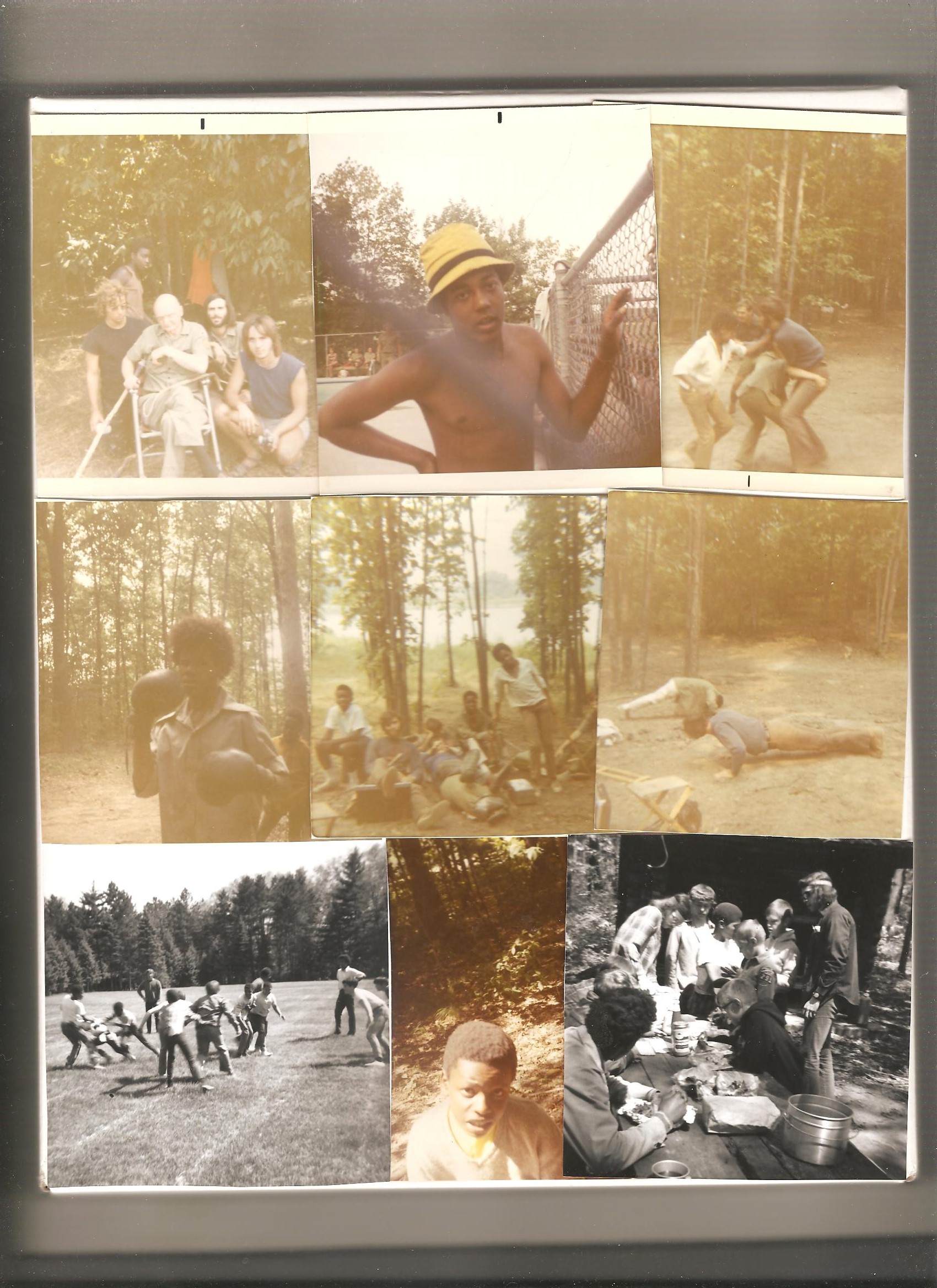
The Boy Scouts Part 2: Troop 291

When I wrote about working for the Boy Scouts, I mentioned my troop: Troop 291 from Riverside Church. Now I’d like to talk about some of those kids and tell not all that I remember, but what I can share about their lives, for some things are best left in the recesses of our minds where they either glow or haunt us in the blackness of the night.

The first troop meeting I had with them was that fourth meeting when I declared myself their scoutmaster and decided it was time to begin to start teaching them some of the basic camping skills they would need to advance up through the ranks. So we started with tying knots.
I didn’t know them well enough yet to decide on who I would pick to be the troop leaders. This was important because in scouting, if a troop is run properly, the boy leaders actually run the troop and the scoutmaster acts as a sort of advisor. He counsels the boy leaders and makes sure they don’t deviate too far from the basic principles of scouting, which is essentially about developing self-reliance, but he should not make decisions for them but help them to learn how to make decisions for themselves. The program is centered on the development of the boys, not the adults, or at least that’s the way it is in principle. Many adult scout leaders seem to either forget or overlook that. But having been a scout myself, and a junior leader (the senior patrol leader of my troop) and having even been sent to a 2 week junior leader training camp by my troop, I understood this all too well. But at this point in my association with the troop, I still didn’t know which boys had the potential to be effective leaders and so I was sort of feeling my way around them during the knot tying.
We had found some rope in the church basement but the lengths were too long and so I turned to a few of the older boys and asked if any of them knew where we could get a knife to cut the rope into strips. It was at that point that Jeff Diehl pulled out a switchblade knife from his back pocket and proceeded to cut the rope. He did it casually, almost too casually, and I knew he was waiting to see how I would react to that switchblade with its 6 inch blade (anything over 3 inches is considered illegal by most police departments). I didn’t say anything at first, then asked him if I could see the knife after he was done cutting the rope. I think he half expected me to confiscate it, but I just felt the weight of it, its balance, tested the blade, and then handed it back to him. Then I casually said I had one, too, but with a curved, Italian style blade. That piqued his interest and he asked if I had it on me. I said no, but if he’d like to see it, I’d bring it in next week. And, of course, I did. He offered to trade for it but the knife has sentimental value for me so I declined. But from that moment on, we had a bond. And I later decided to gamble and made him my senior patrol leader. He was a bit aloof from the others but the other kids respected him, and he turned out to be a good choice. He was a bit of a loner, liked to hunt, and brought me some roasted squirrel meat once which I found tasted a bit like chicken, though perhaps a bit more pungent. He stayed with me for the two years, though by the end of the second year his interest was waning. But I think his discovery of girls, and their interest in him, had something to do with that.

The next leader I picked was Billy Thomas as a patrol leader. He was a short, slender black kid with an easy smile but a sardonic look about the eyes that only someone adept at maneuvering their way around poverty develops. He was poor but not ashamed of his poverty, just adjusted to it, if one can ever truly be adjusted to being poor without being defeated. But Billy was the type of kid who had no time for dark thoughts, being too busy dodging the temptations to crime and drugs that surrounded him. He would not succumb to anger or self-loathing and though he didn’t go out of his way to befriend white kids, he didn’t avoid them, either, but was just mistrustful. He told me early on that if we were going to have rules, then the punishment for breaking them had to be clear and there could be no exceptions to it. He was scornful of his principal because he threatened to paddle offenders of school conduct (corporal punishment in schools was still widespread then) but once you were in his office, he would tell students to pretend they were paddled and then let them go. Billy thought that was a weakness. not a kindness, and had only contempt for him. So the rules we established for conduct within the troop had to have a punishment that was enforced, otherwise there was no point to the rules. Though I tend to be a little more flexible by nature when it comes to rules, I realized that these kids, because of the laxity in terms of any discipline in their lives, needed structure. So I adjusted to their needs and tried to pick leaders who would enforce their agreed upon code of behavior. And Billy was the best patrol leader I had because he set an example for the others, and he performed all his duties with an easy-going smile.

Junior was another gamble as a leader and I made him Jeff’s Assistant Senior Patrol leader. He was hot tempered, partly because of his small stature, partly because he hated the name Herman and preferred Junior even though that implied second and he did not want to attain any rank but first. But he was a quick study, a hard worker, and though he lacked Billy’s patience or Jeff’s charisma, he worked harder than anyone else in the troop. He also got into the most controversial fight at summer camp and dragged Billy into it, too. And if I hadn’t stumbled onto it in the early stages, it could have become a race war at Pioneer Scout Camp that summer.

It started when Junior and Billy were out on a canoe and a white kid from the Wood County troop (small town boys from rural Ohio who were in the campsite next to us) in another canoe called them “niggers”. Junior, of course, hit the kid with the canoe paddle. The Wood County boys hurried back to shore, not being used to such a display of “hostility” I was told later. Anyway, they gathered together a few more older boys and there were 5 of them laying in wait with sticks and one even had a Scout knife in his hand. I was out walking with Eddie Cain who had become my shadow that summer (another story I’ll get to in a minute) when I spied them crouched between the 2 campsites. I didn’t know what they were doing there until I saw Billy and Junior come walking down the path. Then the 5 Wood County scouts loomed up to block them. I waited to say something (no one saw me yet) to see what would happen and Billy and Junior, of course, acted true to their natures. Junior was ready to fight but Billy put a hand up to stop him, turned to the taller white kid with the knife and said, “And just what you gonna do with that?” The white kid got flustered, put the knife behind his back as if to hide it, and said “Nothing.” Billy just grinned, then said, “I know you gonna do nothing.” And it was then I came down the hill and asked what was going on. Billy said, “We’re just out walking and these boys came to meet us.” The Wood County scouts just stood there looking like kids look all over the world when they get caught with their hands in the cookie jar and so I asked them to go back to their campsite but to tell their scoutmaster I’d like to talk to him. He never came over, though, but the camp director, Bob Keogh, did to inform me that our neighbor had lodged a formal complaint against my troop for bullying and other unscoutlike behavior involving a canoe paddle. I told Bob about what I saw and what I had learned preceded it on the lake and though he sympathized, he was clearly caught in the middle of conflicting accounts.

And there it rested, at least until the Friday night, camp wide Pow Wow when scouts and scout leaders were taken as pledges for the scouting honorary the Order of the Arrow. Pledges were members of troops who are voted on by their troops as outstanding examples of the principles of scouting. They were to spend that first night and the next day in silence, only being given water and salt tablets, while they worked on conservation projects throughout the camp. Afterwards, if they passed this ordeal, they were officially inducted into the order at the Saturday night campfire in an impressive ceremony where they were rowed across the lake in canoes by members of the order dressed as Native American Indians. Both Billy Thomas and the Wood County scoutmaster were taken as pledges that evening.
I was proud of Billy the night he was inducted but even prouder the next day when the Wood County scoutmaster came over to our campsite to formally apologize to me and the boys. He said at that time that Billy had impressed him with his manner, so very much in keeping with the ideals of scouting, and that anyone who behaved that way certainly couldn’t be lying about what happened in the incident with his scouts. And thus, vindication. And Junior learned that sometimes victory was so much sweeter without having to throw a punch, or a canoe paddle.

Another lesson came when the boys wanted to make peach cobbler but we lacked both a Dutch oven to bake it in and the necessary ingredients: flour, baking soda, canned fruit, etc. I really can’t remember everything we needed but I do remember we not only didn’t have any but we also didn’t have the necessary funds in our troop account to buy whatever we needed at the Trading Post. So I took both Billy and Junior with me to the back door of the mess hall and asked to speak to Bob Keogh. While waiting, I told Billy and Junior not to say anything but to let me do the talking, but they were to look sad, no smiling unless I gave the cue. Bob came to the door and I proceeded to ask if we could get any cobbler that might be left over from the staff’s dinner the night before. I told him how the boys wanted to try it but we didn’t have an oven nor could we afford to buy whatever we needed but if we could get a leftover piece or two, they could all at least get a taste. Well Bob looked at both of them, and I have to admit they did look sad, and he said wait a minute and disappeared. Before long he reappeared with two Dutch ovens, a bag full of boxes of flour, baking soda, some eggs, cans of fruit (peaches, apples, blueberries) and milk. When I acted surprised and said we couldn’t afford all that, he just seemed more embarrassed than we were and gave it to us. Later, as we were walking back to the campsite, I told both boys that just because they were both poor and black, which was a major disadvantage in America, they could, at times, if they knew how to work it, turn a disadvantage into an advantage. “And remember this when you graduate high school and start applying to colleges.” And I told them how my brothers and I all got scholarships and grants for both financial reasons (no father) and because they were members of a minority (Chinese, if you remember the post about my brothers). It was the first time they ever thought they had a chance to get a college education.

And a boxing story now. This is about Eddie Cain, the middle brother of the three Cain boys. Randy, the oldest, was a bit slow; you could say he was two beats behind everyone else on his good days. Eddie was partially sighted and his mother at first didn’t want him to go on camping trips but we all watched out for Eddie so she finally relented. He had extremely thick glasses and couldn’t read unless he was actually on top of an object. Kevin, the youngest, was considered the “normal” brother because there was absolutely nothing physically or mentally wrong with him, except that he was spoiled and a bit of a whiner. Everyone in the troop sort of tolerated Randy, protected Eddie, but didn’t care for Kevin. Billy summed it up by saying he preferred the abnormal Cain brothers to the normal one since they at least tried to do their fair share of the work. So Kevin ended up in Bruce Ellis’ patrol while Billy took in Eddie and Randy. But Kevin had the nasty habit of making fun of his brothers, especially Eddie and so one day at camp Eddie asked if he could put on the gloves and have a match with his brother. Everyone went into panic mode and Billy pulled me aside to say it would be suicide and “Mr. Durso, you can’t let him.” But there was this look about Eddie, the set of his jaw, the way he refused to back down from the challenge, and Kevin gloating, mocking, teasing him mercilessly. And so I let them put on the gloves, Patrick refereeing, the troop forming the circle they would box in. There were three one minute rounds, just like everyone else, and Eddie bound and determined to be like everyone else. And though Kevin seemed to be getting in the most hits that first round, by the time we went to round two, Eddie had landed a few solid punches on Kevin and Kevin suddenly became insecure, hesitant, and every time he moved close to land a punch, Eddie clobbered him. The scouts were cheering wildly for Eddie, and Eddie started grinning, his body poised, and he landed every punch he threw. By the time round three ended, Eddie was the undisputed winner, the boys hoisted him up and paraded him around the campsite, Kevin teary eyed just sulked away to his tent and didn’t come out for hours. The next day, with Eddie trailing me as usual around the camp, he pulled my sleeve and whispered in my ear, “I can see shadows, Mr. Durso. And I just swung at every shadow I saw.”
And the news got back to their mother when we all went home and she was justifiably upset. But a day or two later, she called me at the Scout Office and asked if I would come by the house later that afternoon. When I got there, she told me she wanted to thank me in person for making her son Eddie feel like a normal boy for once in his life. And there was Eddie grinning behind those bottle thick glasses somewhere behind her.

And finally there was the council wide camporee where troops from all over Northwest Ohio came to compete in events that utilized various scouting skills, like building fires, tying knots, using a compass on a scavenger hunt, log rolling, following trails, etcetcetc. It was an all day competition and we had 18 boys that weekend doing their best to win a prize. By day’s end, when all the points from all the contests were tallied up, Troop 291 took third prize. The scouts were jubilant. And Jeff, the senior patrol leader, and Junior, his assistant, went up to get our trophy. It was a golden shovel. Well to say there was a general letdown among the troop is an understatement. They were thinking something more along the lines of a cash prize, or a barrell full of candy, or a gift certificate to MacDonald’s for the troop, but a golden shovel, or to be more accurate, a shovel painted gold, was not exactly the picture they collectively had in mind. But to their credit, they didn’t act disappointed or make any faces but acted appropriately humble until we were back in the cabin later that night. To booster their spirits, though, my assistants, Galen Koepke and John Foster, and I chipped in to treat them all to a late night meal of Big Macs, French fries, and cokes. That soothed them. And later, at our first troop meeting after the camporee, we hung the golden shovel on the wall of our meeting room and I noticed a look of pride as Billy said, “Anybody try digging any holes with this thing, they got Patrick to talk to.”

Those kids were hard to leave but there comes a time when you need to devote time to yourself rather than others. Though my life has been a constant battle with my heart the battleground where the impulse to be the missionary, as my former boss at my NY college called me, and the maverick, as his assistant labeled me, play out the tug-of-war for its possession. And I moved on, but those kids have stayed with me. They were part of the first real fight to change the corner of the world I was in, and set that pattern of my life for the many times I embarked on similar crusades. But there is no crusade where I am now, no chance to do my part to empower the powerless, to help forge inroads for the disinfranchised toward a better life. I’ve left that fight for others and find I have no real outlet for the passion stirring in my soul. Now, though, I find these ghosts of the past are calling me back from my retreat halfway round the world. And it’s a call I find hard to resist. The Billy Thomases, the Jeff Diehls, the Patrick Cottons mingle in my mind, my heart with the Maria Rodriguezs, the Gilda Galianos, the Ali Esmens, the Muzaffer Alhans, the June Hwangs, the Muhammed Zia Karims, the Jenny Hernandezs, the Numa Dongos, and the broken bodies of the Harry DeCostas of this world. How does one deny a part of oneself? I felt too old, too weary, too bitter to continue, but once a long time ago a woman I used to love said someone must devote themselves to a cause they know they cannot win. And she looked me square in the eye and said I was that someone. No matter how hard I’d like to be someone else, I hear Billy telling me that last time I stood halfway out the door, “It ain’t gonna be the same when you go.” But I have to ask myself, what will it be like when I return?

troop 291 001

On Working for The Boy Scouts

…..My first job out of college was as a Scout Executive with the Boy Scouts of America. Essentially that meant I was a professional boy scout. You know, going camping a lot on weekends, going to an endless series of Cub Pack and Boy Scout meetings in the evenings, visiting schools and churches and community centers during the day trying to recruit scouts and potential sponsors, and the perennial job of trying to recruit volunteer leaders. These jobs were difficult enough in white, suburban, middle class and affluent neighborhoods but were a hundred times more difficult in the poor, inner city neighborhoods that comprised my district. It was actually the poorest area in Toledo, Ohio, which was the city in which I worked. What was a nice Italian American kid from NY doing in Ohio? Well, my so-called best friend at the time, Steve Cohen, talked me into transferring there to finish my BA in theatre after graduating from the community college we both had attended on Long Island because he insisted I would get a full grant there (which I did) but honestly, Ohio? But why return after graduating? Well, there was this woman I met there who eventually became my wife, then ex-wife, and she was there. So to be with her, I uprooted myself once again and returned to a state I was not particularly happy to be in.
……………………………………………………………………………………………………….
…..But that’s another story. This is about the Boy Scouts and there are some things I did working for them I was proud of, as well as some people I met whose memory I still cherish and whose pictures still grace my walls here in Istanbul and in a photo album of those years.
…………………………………………………………………………………………………………..
…..Now how I got the job with the Scouts is another mini-story and it goes back to the year before when I was doing my student teaching in a small consolidated rural school district. I was there for 10 weeks and my supervising teacher was a retired Marine Corp colonel named Archie King. He liked to sign his name “a king” which I think says something about his personality, you know the lower case, the lack of punctuation after his initialed first name. Anyway, the deal with student teaching was you do everything possible to get along with your supervising teacher because his/her recommendation at the end of the term will be the single most important element in your file toward getting a teaching job. Of course, you must also keep in mind that this was during the Viet Nam War and there were still exemptions from the draft allowed for jobs like teaching. This was before Richard Nixon established the lottery that ended most of those exemptions. Okay, so I was trying my best to get along with Archie but here I was, an Italian American kid from NY, a theatre major in college, with long hair and a definite attitude toward the military. Also, long hair in those days was not what it is today: a fashion statement. Long hair was a political statement then. Having it meant you were at least liberal in your thinking, possibly anti-establishment, maybe even a dope smoking, communist leaning radical. SDS people wore long hair. Hippies wore long hair. And guys protesting the war, marching for civil rights, staging demonstrations wore long hair. Wearing it meant you at least were in sympathy with them and most likely would vote Democrat in elecions if you voted at all and weren’t some dropout living on a commune. Well, I wasn’t a dropout, wasn’t a hippie, had no communist affiliations, but I was definiitely a liberal Democrat who marched in protests and didn’t feel any obligation to going over seas to kill people, especially ones who were of the same racial background as two of my brothers.
…………………………………………………………………………………………………………
…..So Archie and I had a natural mistrust of each other BUT I was told by my college supervisor not to make any waves, swallow any emotions I felt rising to the surface by any remark he might make, and just get through the 10 weeks. Of course, I understood the wisdom of her advice, nodded, and did my best to pretend I thought he was a wise old man. But at the end of the first week, just before he was handing over the English classes I was to teach to me, he told me his philosophy on grading essays. He looked at the papers and if they were neatly written, the headings were correct, the title centered, the margins clean, and any crossed out words were done with just a single line through them, then he gave them an A. Any paper that failed to meet those criteria were graded according to how many lapses from those guidelines they committed. For instance, if the handwriting was a bit difficult to read, if the margins were not perfect, the title not centered properly, and words were crossed out with more than one line neatly through them, they got an F. When I asked, “But what if they had something interesting to say?”, he just smirked and said he didn’t bother reading any of them. It was obvious to him that if the papers met his criteria, then they were A papers and if they didn’t they were not A papers. There was no point in reading them. That took too much time.
………………………………………………………………………………………………………..
…..Well, no matter how hard I tried, I just couldn’t do THAT. So the grades starting to change after I took over that second week and soon, at the end of the marking period, toward the end of my 10 weeks, many of his A students were getting Ds and Cs and quite a few of his F and D students were getting Bs and even some had As This, of course, led to a meeting with the principal, the college supervisor, Archie and me where he demanded the grades be changed. The principal then asked me to justify my grades. I just asked him to read the essays first because the grades were based on the content of each paper. So the principal and the college supervisor both sat reading while Archie and I avoided looking at each other, stared at the ceiling, the walls, our respective laps, and finally when the two of them were done, the principal looked at me, then at Archie, and said quite simply, “The grades will stand as they are.” So I won that battle, the students all loved me (to this day I am still in contact with a few of them) and I felt vindicated. However, as my college supervisor warned me, Archie had the last word. He wrote what was to her eyes the worst possible evaluation a student teacher could possibly get and doomed any chances I had of finding a teaching job in what became a highly competitive job market thanks to the war.
…………………………………………………………………………………………………………..
…..Perhaps if I stayed in NY, I would have found employment but I returned to Ohio to be with the woman I was in love with and no one in Ohio would hire me as a teacher. That evaluation, even if they thought it might be unfair, marked me as trouble and with the long hair, I was not conforming to what was acceptable in that very conservative state. So after a few months of futile job searching, my placement file containing that recommendation was sent to the Toledo Area Council of the Boy Scouts of America for consideration as a candidate for a job opening that they had. And two days later, I was called in to interview with Dave Thronton, the Director of Field Services and the second most important man in the council. I had no hope at all of getting the job since the Boy Scouts were a conservative organization staffed by a lot of flag waving Republicans, expecially in Middle America. But I went anyway. And as I entered Dave’s office, this square jawed, crew cut ex-football player rose to his feet, came around from his desk and said, “Let me shake the hand of the man that Archie King gave a poor recommendation to. “He was smiling, even laughing as he pointed to a chair and we sat and talked for over an hour about everything, including Archie King whom he knew as a volunteer with the Scouts and whom he thought was a complete moron.
………………………………………………………………………………………………………..
…..So Archie’s evaluation landed me that job. And Dave Thornton became my advocate during the two, sometimes stormy, years I worked for him. Stormy because I was branded a maverick back then, a brand that has stayed with me ever since. And a maverick, in case you don’t know, is not just the name of a 1950s TV series but is what people called a cow without a brand, one that didn’t belong to any herd, was independent then of any group affiliation. And that is why Dave wanted to hire me because he believed only someone like me, with my long hair flying and my political convictions out in the open, could make inroads into the inner city where they desperately wanted to go. And when they sent me for training at Schiff Scout Reservation in New Jersey, Dave wrote the director of training to say, I found out later, that they wanted me back looking exactly the way they sent me. They weren’t, he told them, to touch a hair on my head. And that’s why I was the only long-haired Scout Executive in the country at the time.
Now I went where they wanted me to go and I have to admit almost everyone I worked with, once they got over their natural mistrust, supported me in all the programs I created.
…………………………………………………………………………………………………………
…..The people I loved working with: Dave Thorton, Art Adler, Ben Pettigrew, Bobby Jones, Troy Jackson, and the others I clashed with: Jack Darrah, Jack Darrah, Jack Darrah. And the kids who were in my own private troop, Troop 291 from Riverside Church: Billy Thomas, Jeff Diehl, Eddie Cain, Herman “Junior” Warren, Patrick Cotton, and others but those five stand out.
…………………………………………………………………………………………………………..
…..Before I get into my troop and some of the programs I started, I should describe the job. A Scout Executive was the guy who organized troops, cub packs, explorer posts by first finding a sponsor, some organization that would provide a meeting place, and then visiting schools to recruit boys (and girls for the explorer posts), and then recruiting adults, usually from either the sponsoring organization or from parents of the kids or sometimes some former scout would show up at the office and volunteer to work with a unit, and basically putting all those pieces together. In the case of cub packs, you needed to find den mothers (again, usually from the parents) and a cub pack leader (generally a male but sometimes, in the inner city districts where I worked, you used women when men weren’t available). The boy scout troop leaders were men, as well as the explorer posts, but again, in inner city units, this was difficult to find. Usually you could find a sponsor, a meeting place, and schools would generally let you come in and make a sales pitch for the program, but in districts like mine, that wasn’t always the case. But even if you could overcome the obstacle of a sponsor, there was the volunteer adult leadership that was a problem. There were just too many single parents or parents working two, sometimes three, low wage jobs while trying to make ends meet. I mean, we’re talking people below the poverty line here, or teetering on the edge. And though many would have liked to volunteer, it just wasn’t economically feasible for them to do that.
…………………………………………………………………………………………………………
…..So that’s how my first program came into existence. The Den Sister Program. The idea was simple: I needed den mothers for cub packs and there just weren’t any to be found in the neighborhoods I was working, so I thought why not use college students who were education majors and thus would cherish the experience of working with kids in extra-curriculum activities. I approached some sororities first who were known for their altruistic work and gave my sales’ pitch. Before I knew it, I had 4 coeds who had a car and were willing to drive the 20 odd miles into Toledo to work with these underprivileged kids in the poorest area of the city. From there, word of mouth got me some more volunteers and soon I had about 6 groups of college girls from three different colleges–Bowling Green University, Toledo University, and Mary Manse College–all holding weekly meetings with kids from the ages of 8-11 in inner city schools. From that group, I soon had male volunteers to work as assistant scoutmasters in other inner city troops and even started a boy scout troop in an orphanage. There were expenses to run the program: gas money for the students, supplies, registration fees, etc. which I paid for out of my own pocket at first, and though many of the students didn’t want to be reimbursed, I felt morally obligated to do that. As the program grew in the second year, I needed to find some organization to help fund it and approached the organization called Model Cities which had deep pockets of federal money. This was part of Lyndon Johnson’s Great Society and all I had to do was go to a meeting and make my proposal. Well, that’s how I got a death threat from the Black Panthers, but that’s another story, and suffice it to say, since I’m still breathing, nothing came of it. Just talk.
……………………………………………………………………………………………………….
…..Anyway, there was some local coverage but the chance for national recognition hinged on the Field Director Jack Darrah who was supposed to handle that. He was a smug, arrogant product of a white, middle class background from some insular neighborhood in some Midwestern city and we just never did like each other. I had long hair, muttonchops, wore moccasins with my suits, jeans with my scout shirt, was living with the woman who would one day become my wife, was an anti-war, draft dodging liberal. Without going into details, we finally came to blows, or I should say he physically attacked me in the Scout Office, charging like an enraged bull, which I sidestepped, got him in a headlock, and still regret not belting him when I had the chance. Art Adler, my partner, couldn’t understand why I didn’t clip him, but I saw no point in it at the time. Anyway, our boss, Paul Reinbolt, brought four of us into his office the next morning–Dave, Jack, Art, and me–and had Jack officially apologize to me. Watching him shift in his seat, stammer, grow flush with embarrassment was actually better than punching him.
…………………………………………………………………………………………………………..
…..The Den Sister program was just one program I started. I also initiated a camporee for just inner city troops, a warehouse for used uniforms for underprivileged kids, provisional troop camping in the summers (that’s where kids from different inner city troops could spend 2 weeks in camp with me acting as the scoutmaster for all of them and with a paid staff of 3 assistant scloutmasters recruited from the college plus my buddy Ben Pettigrew and junior leaders from 4 different inner city troops), and a scout troop that met in a juvenile jail. I had my own troop, too: Troop 291 from Riverside Church. We met every week on Monday nights (my official night off) and they were a racially mixed group that had a reputation before I took over as troublemakers. They loved to fight and so we organized boxing matches for “grudge fights”: three one minute rounds with the gloves on them and my junior assistant scountmaster, Patrick Cotton, as referee. Patrick was a 17 year old black kid whose father had been a Golden Gloves champ when younger and had trained Patrick himself before he disappeared. And those “grudge fights” let them get their anger out without seriously hurting each other. It was their rules, which I learned was necessary to impose order and discipline on kids who desperately wanted order and discipline in their lives. These rules were devised by the junior leaders themselves–Jeff Diehl, Billy Thomas, Patrick Cotton, Junior Warren–and we all, including me, obeyed them, otherwise we hit the ground and did pushups: 25 for the first offense, 50 for the second, 100 for the third, and it kept doubling with each offense but no one ever went beyond 100. And the rules were: no fighting (unless it was supervised), no stealing, no cursing, leave the meeting place or campsite cleaner than we found it. And the rules only took hold when I got down on the ground and did 25 pushups for uttering a curse. It was then they understood that the rules were for everyone, regardless of race, age, or position, and they began not just to respect someone because you were told to, but to respect someone because they earned it. And when I inspected the campsite before we left, the rule was one pushup for every piece of litter I found, and again, that rule became meaningful when I dropped to the ground with the rest of the troop and did the pushups for each piece of litter found with them.

That troop, those kids, taught me about the importance of giving one’s word, because they had been lied to before (a previous scoutmaster stole the money the troop earned in a fundraising project to buy camping equipment) just as they were lied to by the government, by their teachers, by every adult in their world, and they needed to know I would never lie or cheat them, and that if I promised something, I would deliver. And I promised them that they would be treated fairly and equally, and so my actions always had to mirror my words.
…………………………………………………………………………………………………………
…..How I got to be the scoutmaster was another example of keeping my word. You see, the first step in starting a troop is to go into the school and recruit boys. Then you show up at the first meeting and try to talk whatever adults show up with their sons to be the leaders. Well with 291, there were about 20 suspicious kids that first meeting (remember, the previous scoutmaster had stolen their money) and no adults. The second week, there were still about 20 kids and still no adults. The third week, when no adults showed, one of the kids turned to me and said, “I guess you won’t be coming back next week.” I said that I would and I’d be bringing a scoutmaster for them with me. Well that fourth week I walked in with a scout shirt on and said, “Guys, I’m your new scoutmaster.” I just couldn’t let those kids down. And I was the scoutmaster for two more years until I quit the Scouts and went back to New York. But not before I recruited a parent to replace me. That troop had never had a scout get past the rank of Second Class but I had 4 scouts make Star (that’s First Class plus 5 merit badges) and we won third place in the district camporee that year. And more importantly, they had stopped fighting and stealing and actually worked as a team, black and white together.
And for me, that was what scouting was about: teaching teamwork, developing leadership potential, things I still believe in as an educator. And that is why I became an administrator instead of just staying in the classroom because I’m still trying to encourage teamwork among my staff, develop leadership abilities in those I think have that potential, and develop programs that will help students grow, to reach more people than I could possibly reach in just a classroom. The administration is the dark side of education but it’s where light has to shine and sometimes it takes a maverick to shine that light.
…………………………………………………………………………………………………………
…..And though I had more heartbreak than I counted on, seeing kids I believed in turn to drugs, crime, end up crippled and outcast, because no matter how successful you are in the inner city, tragedy is just around the corner every day of every week, I still saw kids like Billy Thomas develop the characteristics that would serve him well as a man. And if I had to do it all over again, I would slip on my moccasins, grow my hair long, and fight those battles against prejudice and poverty all over again. For Billy, for Junior, for Patrick and Jeff and old Ben Pettigrew and Dave Thornton. For if one’s words aren’t reflected in one’s actions, then your words are empty and I just wouldn’t know how to live with myself if that were true.
…………………………………………………………………………………………………………..
…..So whatever I’ve done since those days, I learned from my experience with The Scouts. It taught me the value of my own convictions and, like Billy, it forged the characteristics that have made me a man.

On Writing About Rizzo & Dogs

Years ago, actually many years ago, I wrote what would become my first Rizzo book. It was called like a deuce, which was a reference to the Bruce Springsteen song Blinded By The Light. The lines went:
He was just blinded by the light
cut loose like a deuce, another runner in the night
blinded by the light
Mama always told me not to look into the sights of the sun
Oh, but Mama, that’s where the fun is.
Springsteen was referring to a souped up car, like “a little deuce coup” to quote a Beach Boys’ song, but I intended a double meaning. Rizzo just wasn’t a sports car zooming around in the night but also a wild card, as in “deuces wild” in poker, so he was in essence unpredictable. He was my journalist protagonist who was too cocky for his own good. And Rizzo in the first Rizzo books (like a deuce & Rizzo & Mike) had a dog who was a little wild, too.
Now Rizzo as a character stayed with me and aged in a series of books I wrote using him, mainly because various agents I had couldn’t seem to sell any of those books and I just refused to let him go. He became, as had many of the characters in those books, personal friends of mine, as real to me as real friends of mine, who in many ways influenced the characters in those books. The bantering between Rizzo and his best friend Peter was so similar to the bantering over dinner tables, in kitchens, in bars, walking on the street, in theatre lobbies that friends of mine and I indulged in all these many years. Those characters were, in essence, my friends and me. And the nameless dog that was, as Jimmy Powell once quipped after reading the earlier book, the second most realized character in the novel, was my dog Frodo, alive in those pages, a ghost in the novels to follow, haunting Rizzo, and also that other character who pops in and out of various novels of mine, Anthony Provenzano.
So it wasn’t unusual that one day last week when I was talking via skype with my old friend Chuck Thegze, he started asking me about some parts of my life he only became aware of by reading my blog. Now Chuck has known me since he was the West Coast editor of Avon Books and he tried to buy my book Rizzo & Mike for Avon (that was 1978) and though the house eventually passed on the book, Chuck and I became good friends. We both still remember the night we played pool in some pool hall in Santa Monica and also the night he came to my house in Santa Monica for dinner of my famous red clam sauce and he met my ex-wife Jane (who wasn’t my ex-wife at the time) and my dog Frodo, who left a lasting impression on all my friends and family.
So we got to talking about Frodo, who in Chuck’s mind is spiritually connected to the Rizzo books and to LA even though Frodo was a native NYer just like me who just happened to spend part of our lives in Ohio (perish the memories) and LA. He wanted to hear the story of my first night in LA, when after having driven across the country in a make-shift caravan with 3 cars, a U-Haul 24 foot truck, 6 adults (Dave Capus, his girlfriend soon to be second wife Peg, Dave Reed, another friend of David’s named Bill, Jane, and me), one child (Peg’s daughter Ivy), a cat (Dave Capus’ whose name, sorry, David, escapes me)and my dog Frodo (and yes, he was named after that character in Tolkein’s books in the hopes he, too, would be loyal and brave, which he was, though a bit wild, too, perhaps because of the way I played with him.). The two Daves, Jane and I, and the dog drove ahead to find lodgings for us all and that first night we all stayed in a 4 person motel room in Canoga Park which allowed pets. We did find a 5 bedroom house in Simi Valley where we all lived together for 2 months but that’s another story. The first night, though, the two Daves went off scouting out bars while Jane and I drove into Beverly Hills to have dinner with my only friend in LA, Rip Crystal, & his girlfriend who would eventually become his wife, Fran.
Whew. That was a long intro.
Anyway, we hired some kids to stay in the motel room to watch Frodo while we were gone and when we came back around midnight, the room was empty but there was a note to call their mother. As it turns out, she had the bright idea of bringing them all to her house, and Frodo, who probably thought he was being kidnapped, bolted out of their door at his first opportunity to escape and disappeared somewhere in Canoga Park miles from the motel, lost and probably scared, which pretty much sums up how we felt when after spending 2 hours driving throughout their neighborhood calling his name every 100 feet or so, finally dragged ourselves back to the motel thinking we had lost him forever on our first night in LA.
However, much to our surprise and relief, he was waiting for us expectantly on what was to be our bed, his tail wagging profusely, those cries of joy coming from us all, and the two Daves laughing as they explained how Frodo was pacing up and down the block in front of the motel waiting for someone he knew to come home. How he found his way back was a mystery; however, that night I let him sleep between us though insisting he stop wagging his tail.
There are so many stories featuring Frodo but my favorites revolve around his total loyalty to me. As a puppy, he wouldn’t eat unless I sat next to him on the floor and would throughout his life insist on climbing onto my lap while I was trying to write, hunched over my trusty Smith Corona, even when he grew up to be a 60 pound dog. He was black & tan, half German Shepherd and half Collie, with a slightly pointed head and those long, floppy ears which I refused to have clipped. He was fixed late in life (when he was five) by Jane who had him living with her the first time we separated in North Hollywood because I agreed to let him live there to protect her since she lived with another actress and both felt safer with Frodo around. Besides, I lived in a much smaller place in Malibu and it was really too small for him. How he became neutered, though, without my permission happened because he bit the first boyfriend she took up with after leaving me. I loved him for that, but was distressed she had him fixed and almost took him away from her. But I relented because I did worry about her and Lauretta, her roommate.
The other time he proved he was my dog was just before I left LA after losing my store. I had been housesitting at Ren Weschler’s mother’s house for the two months prior to leaving and Frodo was staying with Jane and her soon-to-be second husband Jack. Our agreed upon understanding was that arrangement was only temporary until I left for NY because up until that time he was with me but I couldn’t have him at Ren’s mother’s house. A few days before I was to board the plane for NY I called Jane to arrange picking up Frodo. She then asked if I could change my mind and let her keep the dog because, as she said, “Jack likes him.” I thought that Jack was getting Jane but there was no need for him to also get my dog and told her to let Jack get his own dog. She kept pleading, though, so I offered a compromise. I told her to bring Frodo to the acting school where she was working when no one else was there and that I would come to the school, sit for a while talking to her, and then get up to leave. If Frodo followed me out to my car, he went with me to NY. But if he stayed in the school with her, she could keep him.
Well, that’s what we did. He was happy to see me, jumping, running circles around me, and finally calming down enough to lay on his back so I could rub his stomach and chest. After a while, when he was resting quietly, I got up to leave. As soon as I stood, his ears perked up, and as I walked to the door, he got up and followed me. We walked down the stairs to the parking lot together, and when I opened the car door, he climbed in, and laid his head on my lap as soon as I was seated behind the wheel. He never even looked back. And thus we flew off into the sunset together.
He would let me take a bone out of his mouth without once objecting, chase a stick for hours and dare me to take it away from him, bark at anything or anyone that came within a block of whatever house we lived in but could tell the sound of any car belonging to a friend of mine within 150 feet of the house and stand, his tail wagging, at the door waiting patiently for them to enter, would walk next to me off his lease and would stop on a dime if he tried to chase another dog or squirrel when I yelled “no!” He had the saddest dog eyes and the wettest nose which he would somehow find a way to stick inside my shirt. He loved spaghetti, lettuce, and raw peanuts, and would go through a large box of milkbones in less than a week. I loved him more than I’ve ever loved any animal and it broke my heart when after fifteen years, he finally couldn’t walk anymore. Taking him to the vet who finally gave him an injection that put him to sleep forever was one of the hardest things I’ve ever done. I cried for over ten minutes in that vet’s office, unable to leave him there, still seeing his eyes as he looked up at me just before the needle went in. I had him cremated, and his ashes sit on my desk today, just as they have sat on my desk these 20 some odd years since that day, physically with me just as he is with me in spirit, still in my memory, my heart, till I join him once again to play fetch in some heavenly field.

Cypress Hills Cemetery

Cypress Hills Cemetery, Brooklyn. My summer job two years in a row in high school. First my junior year, and then in my senior year when my first summer stock experience in Benton Harbor, Michigan ended with the company closing after two weeks because of protests led by the two directors over unfair working conditions. But that is another sordid tale full of intrigue, sexual deviation, drunken pool games, and why I’ve always mistrusted the Midwest. But now it’s summer in Brooklyn and I’m getting a great tan under a hot merciless sun among tombstones and some people I used to know.
First there was Theresa Farrell, my mother’s cousin and daughter of Aunt Lizzie, who we saw quite a bit of and whose husband, Whitey Farrell, got me the summer job at Cypress Hills Cemetery. Theresa was a big woman, dark haired, laughed a lot, and loved my mother. Whitey was a former weightlifter, had tattoos on his arms of dragons, stilettos, a laughing Hot Stuff Devil complete with pitchfork, who would only smoke unfiltered Camel cigarettes because that was what a real man smoked, and chewed on toothpicks when he didn’t have a cigarette stuck on his lips. He was a gravedigger at the cemetery and drove one of the gravedigging machines that broke the ground. He loved to show how strong he was by letting someone dangle from his arms and if he wasn’t barechested, he wore his Mickey Mouse t-shirt with the sleeves rolled up, a pack of Camels tucked in one sleeve. When not working, he could always be found playing poker in what was a sort of breakroom for the workers, drinking his draft beer in the paper cartons they would get from the bars to make it look like they were drinking something else, though everyone, including the foreman, knew exactly what was in those cartons. Whitey would always drive around in the mornings just before breaktime to take coffee and buttered roll orders from everyone and there actually wasn’t anything in life that quite equalled to what that coffee and roll tasted like during those long summer mornings, sitting under a tree at the cemetery and letting work stop for twenty minutes while watching the world go by. Afternoon breaks brought that draft beer in those cartons and again, beer was never as cold or refreshing as it was those hot afternoons in Brooklyn.
The workers were all Italian, Irish, or Portuguese, they being the newest immigrants to take these jobs, and most never finished high school. It was a dream of many of the younger ones to pass the GED test (General Education Development) so that they could apply for a job with the NYC Sanitation Department. But like most dreams, no one that I knew or heard of actually did that.
I worked with Rosario Rizzo, who did not like to be called by his first name and was constantly teased by our co-worker Danny Gallo who would sing out “Rosie” whenever he was far enough out of reach of Rizzo’s hands. Rizzo, it seemed, was actually a distant cousin of mine, his mother being a Durso related to the mythic Frank Durso who was at one time the head of the Durso clan in New York and to which I also belonged somewhere in that genealogy.
Danny Gallo, also the son of one of the gravediggers, was a skinny kid from Jamaica, Queens, with a broad smile and eyes filled with the promise of better things to come. I never saw a dark cloud pass over his face, nor heard a curse, or a sigh. He was always happy, always content, perhaps because he expected nothing more from life than what was in front of him.
Rizzo was a big young man: fat, but with strong arms and legs, like a weightlifter gone to seed but still retaining most of the strength. He had a deep laugh and loved to sing Italian songs when we worked, a booming tenor among the tombstones. And though Rizzo himself was not the prototype of my favorite fictional creation, I did borrow his name for that character and adapted the lack of a first name for him.
Then there was Phil, the son of a Portuguese gravedigger who spoke a little more English than his fellow countrymen, but still did not understand most of what Phil said. Phil was entering college, like me, and loved books, the only one who actually read more than a menu who worked there. He was a typical NYer, sarcastic, a bit jaded, he looked at life through tired, mistrustful eyes, knowing that no matter how bad things were, they would only get worse, and if things were good, it wouldn’t last till nightfall or morning, whichever came first. We went to a Broadway show together, he took his then girlfriend and I took Karen Deene. It was Baker Street, based on the Sherlock Holmes mysteries, with Fritz Weaver and it was the first Broadway show I actually went to. And later that week, during lunch, Phil and I would recite lines from the play, sing the lyrics of the songs we could remember and make up others to fill in the gaps, pretend we were Sherlock and Dr. Watson, amusing the other green attendants.
Lunch was sitting under trees near the entrance and away from the tombstones, eating hero sandwiches, drinking Coke or beer, speculating on how hot it would get that afternoon and whether or not they would let us go early because it hit over 95 (a union regulation, and we were all card carrying union members: AFL-CIO Local 365).
There were others, too, whose names elude me but the faces are clear, the way they talked, the walks, the dreams spun on those lawns, the purr of the trimmers as they skirted the tombstones, the power mowers, the raking, the pitchforks we needed to load the garbage truck, and my favorite job: stoking the fire that burned the grass, the discarded wreaths, the dead flowers, the leaves. Danny and Rizzo worked the truck with Dick, an older year round green attendant who drove the truck and liked to stop by the overpass of the parkway and watch the cars, hoping to see a woman pass by with her skirt pulled up exposing legs.
There was Reilly who once told me to sit in the truck going up the road to drop us off at our individual work spots when I was standing because, as he said, you would stand enough in life so you should sit whenever you got the chance. Reilly was a big Irishman with the red nose of an alcoholic who was a seasonal like the majority of them, working from March through November before being laid off to collect unemployment until March 1st when he would get the call to come back to work.
The foreman, our immediate supervisor, was Ned, medium height, wiry, wore glasses that he was constantly pushing up his nose, and always had a Yankee’s baseball cap on. I actually never saw him without it. He didn’t laugh much, but he would smile at all the workers, chain smoke Lucky Strikes, and knew everyone of us by name, age, and where we lived, who we were related to or knew at the cemetery because no one got a job there without some kind of connection to someone else who worked there. He coughed a lot and I imagine he must have paid dearly, like Whitey did eventually, for all those cigarettes.
I cut myself on one of those trimmers one afternoon, a stupid mistake that earned me five stitches in a doctor’s office without any anesthesia while Ned waited patiently by my side. The scar is still there, a white line just above my left knee, to remind me of those summers, those people, a life working class people much like my family were destined to live, a life I somehow avoided because of my senior year in high school that was sandwiched between those two summers at the cemetery. I like to think Phil escaped it, too, though I know Danny’s and Rizzo’s ambition was to work full-time among those tombstones, among those men, till they were eventually laid to rest under those trees in a discounted plot reserved for employees in good standing.
And whenever I would visit my mother’s and father’s graves at St. John’s Cemetery in Queens, I would think of Danny, Rizzo, and Phil, and wonder who would burn the flowers I left behind when they dried up. And thank whatever power there is in the universe that it is not me.

My Senior Year of High School

Senior year of high school found me attending acting school in Manhattan. It all came about because I was enacting some story in my head to Jimmy Hanley who looked at me with a half smile on his face and said, “You oughta be an actor.” Now I probably thought the same thing at one time or another like every kid thinks, but never really taking it seriously because the only thing I ever wanted to do since I became enthralled by E.B. White’s Stuart Little was write. I mean, I loved reading, loved the worlds I discovered in books, loved getting lost in other people’s lives which in books I seemed to be able to do so easily, and I thought I’d kind of like to do that, too. Create worlds people could get lost in, create characters people could care about, want to get to know, have coffee with, maybe, and watch logs burn in a fireplace as they traded stories. So writing is the only thing I thought I would ever do, but then this idea of acting, getting lost in characters in real time, seemed like an interesting complement to what I thought would be my life’s calling, so I mulled it over a few nights, then told my mother I was thinking of going to an acting school to see where it could lead. She, naturally, thought it was a great idea, being supportive of us as always, and so I thumbed through a Manhattan phonebook looking for the school I thought I remembered people like Gary Cooper studied at, and quite by accident picked the wrong one, but in the end it didn’t matter.
The New York Academy of Dramatic Arts. On 57th Street between 8th and 9th Avenues. My new second home for a pivotal year in my life. The year I had the two most influencial teachers I would ever know and the year I made friends with people, though I lost contact with as the years slipped by, who would leave their imprint on my heart and mind for the rest of my life.
That year I had my senior English class every morning at 8 and was exposed to Dr. William Jaeger, called Wild Bill affectionately by his students, who opened my eyes to literature in a way no one had previously. We read over 15 novels and plays, poetry, etc., including 2 novels by Camus, J.D. Salinger (whose Catcher in the Rye was banned in the school district so he had us read Seymour: An Introduction & Raise High the Roof Beam, Carpenters, which was his surreptitious strategy of sneaking Salinger into school), Jonathan Swift, Dostoevsky, Faulkner, Stephen Crane, Orwell, Conrad, Sophocles, selected Dialogues from Plato, Shakespeare’s King Lear, which he would act out for us, and so much more. Each morning was an adventure in his class because you never knew what he would do. He was a big man, a part-time actor (I saw him in a small role on TV once), and he pranced around the room, his tie loosened at the collar, his shirt sleeves rolled up, his eyes flashing, his arms flailing in the air. We would sit in a big circle and he was in the center, like in a circus, with him challenging us to think every second of those class periods. I loved books before but he made everything jump off the page. And the class was the strangest mixture of students: honor roll scholars, student body officers, hoods, loners, geeks, athletes. We all couldn’t figure out why we were in the same classroom but a few years later I met another alumni of his who told me because he was that rare PhD teaching high school in those days, the principle let him have the top 100 IQs for his classes, regardless of their GPAs. And his stated mission was to save us before we grew up into adults. I don’t know how many he “saved” but he certainly changed my life.
Then there was Lee Stanleigh at night: my acting teacher. He used a distilled version of The Method to tap into our inner emotional lives in order to get us to “feel” the roles he assigned us for scene study. The breakthrough role for me was Starbuck in The Rainmaker, which no one in their right mind at the time would have thought me capable of. But Lee did. And he talked me into the role, as he talked me into roles like Brick in Cat On A Hot Tin Roof, with Big Ed playing Big Daddy and throwing me around the room in our version of the mendacity scene. Lee saw Tennesse Williams stamped on me and so had me also take on Tom in The Glass Menagerie and Shannon inThe Night of the Iguana, all tormented souls. And each time before I would get to go on, he’d talk me into the mood of the piece, sometimes for 10 minutes or so, and then let me loose with my emotions on my sleeve.
Between those two, my brain and my heart got a workout but I grew in ways I never imagined possible and found pain beneath my surface begging for a release.
And then there were my classmates, everyone older than me and from every possible corner of the city and social-economic class:
Big Ed, an alcoholic, from Elizabeth, New Jersey, and hung up on old Western gunfighters, telling tales he read from Western magazines right out of Zane Grey, his favorite TV show being Gunsmoke, had once worked as a runner for NJ gangsters bringing cigarettes and whiskey across state lines until his partner shot some of the competition in some bathroom in a bar and Ed got spooked enough to quit. His hands shook uncontrollably, his eyes were shot, I saw him suffer from the DT’s once, shaking on the floor, foaming at the mouth. I’d often sit in bars with him late into the evening listening to his stories and even took a bus out to NJ once to visit him in his lair. He was one third of the trio that spent time with Lee after hours, including me and my first real love: Karen Deene.
Karen’s real name was Karen Gross but she preferred her adopted stage name Deene. A NYC Jewish girl from the lower East Side, she grew up in Peter Cooper Village, one of the first middle-income housing projects built in the city. Her father was a doctor who worked for the city in a clinic somewhere, and Karen graduated from Hunter College as an Education major. She was 2 years older than me but graduated college when I graduated high school because she skipped a year in grade school and I lost a year due to contracting ringworm on my head when I was seven and had to stay out of school for 6 months, causing me to repeat third grade. Karen became the prototype of almost every woman I ever fell for: long, dark hair, deep, dark eyes, a sly sense of humor, book smart, cultured, intuitive, perfect in every way except she was in love with Lee who was married to Carol but was openly gay. The marriage happened because Carol had an hysterical pregnancy and got Lee to marry her, only to find out it was a false alarm. They stayed married for reasons I never understood but did not live together. For Lee, it was an attempt to go straight that didn’t work. It was a source of anguish for Karen which made it a source of anguish for me.
Henry Munoz was a Puerto Rican from Jackson Heights, Queens, who looked 16 but was almost 30. He worked in the graphics department of Penthouse magazine and was secretly gay. He confessed this to me while we were having ice cream after watching Zorba The Greek one Sunday afternoon in Lynbrook. He was afraid I would reject his friendship but since he never propositioned me, had always treated me with kindness and respect, I saw no reason to stop being friends. He would often come out to the house on Sundays to get away from his abusive father (he still lived at home) and have dinner with my family. My mother loved him, and he always brought her a gift, spent holidays with us sometimes, and we remained friends for several years afterwards. I lost contact with him, though, after grad school in Ohio and often wonder what became of him in the decades to follow with AIDS ravaging his world.
Alvin Miller, an African American from Springfield, Massachusetts who came down to NYC to study acting. He was a year older than me and lived in Canarsie, Brooklyn with his aunt who I later found out wasn’t exactly his aunt which explained why he was sleeping with her. She was very nice to me, and I often went out there to visit him, and he came to the house, too, many times on Sunday and as explained once before, ate 3 plates of spaghetti with meatballs and sausage. He moved out to LA in my freshman year of college and though we wrote for a while, I eventually stopped getting answers to my letters. He used to joke that he would end up like Sam Cooke, shot by some woman under questionable circumstances, and I always wondered if that didn’t happen one day.
Roger, from St. Albans, Queens, who introduced me to Miles Davis and Charlie Parker and tried to get me to go out with his sister. They lived together without any parents around and I was never exactly sure what Roger did for a living since he rarely seemed to be working but always had money.
Nelson, who lived in Harlem and co-wrote songs with another guy I can’t remember the name of but can see him clearly in my mind’s eye. He was short, wore thick glasses, had a pencil thin mustache that looked painted on, and always had a hat on, a white shirt and sports jacket, no tie. Nelson was tall, athletic, handsome, with the sweetest smile, and questionable sexual preferences. There was a sailor from Haiti who lived with him sometimes and girls were constantly going in and out of his apartment. His New Year’s Eve party was held the same year that the subway strike happened at 5am on New Year’s Day and because of that, I didn’t get home until 4:30 the next afternoon. I slept, more or less, in the living room of Nelson’s apartment and sometime in the morning another friend from school, Lou something who was so in love with Barbra Streisand that he saw Funny Girl on Broadway four times, and I shared a cab downtown and I had breakfast at Karen’s apartment, meeting her parents and coming as close as I ever came to getting a real kiss. I think if I hadn’t been so shy around women then, I might have convinced her to go out with me, but I wasn’t able to read the signs right and whatever opportunity I might have had passed me by.
John Woods, Julian Richards, and Victor Stein and I used to spend two or three evenings after class at the Barney Stone a few blocks from the school on Eighth Avenue doing boiler makers, eating corned beef and cabbage or a ham and cheese sandwich while talking about acting, theatre, films. John was from Brooklyn, Julian from Jamaica (the island, not the section of Queens), and Victor was from Kew Gardens, Queens. Sometimes Big Ed would join us. Julian would sneak a pint of Canadian Club in under his coat and we’d spike the draft beer that we bought at the bar. I’d always get home late those nights, usually catching the 1:52am train on the Long Island Railroad, and get up the next day for school. And on Saturdays, I’d go into the city and meet those three guys along with Henry Munoz and sometimes Alvin at the Cornell Club where Julian worked. He’d get us an empty room and we’d drink, watch TV, talk shop until the evening, then most of us would go out to catch a movie, then go downtown to The Village to eat some more, find a bar, and stay till closing, talking about the one thing we had in common: acting.
And there were others, the names faded from my memory but not the faces, not the way they walked, danced in our modern dance classes, the way I would leap about in fencing class pretending to be Errol Flynn, the instructor shaking his head and saying, “Discipline, Len. Fencing is about discipline not jumping over chairs and slashing the air.” Of course I understood that, but would still jump over chairs anyway with John Woods playing Basil Rathbone to my Errol Flynn and Karen clapping with the others as the instructor gave up with a sigh. And the time we had to recite lyrics using our own stress and intonation patterns and I used the lyrics from the Bob Haymes/Alan Brandt song That’s All which I learned from the Sinatra and Strings album and though I could only look once Karen’s way, she understood and rested her hand on my head after I sat down in my usual spot next to her.
Later, after I drifted apart from them all when I went away to college, and performed the roles I was most proud of: the drifter in Hello Out There by William Sarayon, Leslie Bright in The Madness of Lady Bright by Lanford Wilson, and Biff in Arthur Miller’s Death of a Salesman, and my formal education began, I really never learned anything those people during that year didn’t already teach me.
I remember it all. That year. The year that changed the trajectory of my life. And the people who helped put the finishing touches on the person I was and helped point me toward who I am today.

Sunday Dinners

celebrationWe always had company on the weekends when my father was alive, especially his family, but after he died, they stopped coming and things grew quieter at home. It was also difficult financially which is why my Aunt Mary and my grandmother gave up their apartment in Brooklyn and came to live with us so that they could contribute to maintaining the house and helping my mother. Also, visits from relatives changed during that time and Saturday night was when we saw an influx of my mother’s family coming around. Sometimes it was my mother’s youngest brother Mike, his wife Vivian, and three of their four children, my cousins Theresa, Phyllis, and Michael. My older cousin Joe was married to his first wife by then and though they visited, too, it was generally on holidays. Saturday nights, though, became poker night as I mentioned in an earlier post and dominated by Uncle Joe (my grandmother’s youngest brother), his wife Bernie, and at that time, before the advent of Charlie, my Aunt Mary and that card shark in the family, my mother. My grandmother didn’t really play, but sat, watched, made coffee, spoiled her grandchildren with homemade zeppole filled with raisins, and sometimes made espresso which, as anyone knows, is a vital ingredient in any Italian household.
But I don’t want to write about Saturday nights. I want to write about what became for me my most cherished memories of those years: Sunday dinners. And to be even more specific, the Sunday dinners during the 3 year period from my senior year in high school through my two years commuting to my junior college.
Those dinners were just the family: my mother, my Aunt Mary, my grandmother, my three brothers (Johnny, George, and Robert), and me. Harry was there, too, for most of those years, sitting in his high chair and making my grandmother smile as he sang the Italian songs she had taught him. Sometimes a friend from my acting school would come as a guest. Either Henry Munoz or Alvin Miller which would delight my grandmother because Alvin could eat three helpings of spaghetti with meatballs and sausage which was a record in the family. Where he put it, I’ll never know, because he was skinnier than me, but it made my grandmother beam in wonder. The surest way to an Italian mother’s heart is to have seconds and even thirds of whatever they cook.
And, of course, there would be music playing on the stereo I bought for my mother one Christmas from Arnie’s Electronics in town. Arnie’s also sold 45s and it was the scene of George’s greatest ordeal when Johnny and I made him return the single Laugh, Laugh by The Beau Brummels 5 times because each single was warped. George had to do this because he was the youngest. We didn’t count Robert who was too young to be persuasive. This is probably the first real training George got in persuading a jury, though I doubt he sees it that way. Al Martino, Jerry Vale, Sinatra, of course, Connie Francis, and, for George, The Four Seasons so he could sing along. We all also sang along to Lou Monte’s Pepino The Italian Mouse and The Beatles’ Revolver album and Rubber Soul. There was always music in the house and it was easy to get my mother to dance by putting on Lou Monte singing Calypso Italiano. For a joke, I would sometimes put on the Kate Smith album my father had mistakenly bought for my mother when she was recuperating from her hip surgery. She would still remark years later how she would never understand how he got it into his head that she liked Kate Smith. But usually it was some Italian crooner singing about Naples, which translates into love with songs like Eh Marie, Eh Marie, a song my aunt’s husband Frank often sang to her before his untimely death.
We always ate at 2pm and it was always some form of pasta, though we never called it pasta, just spaghetti or macaroni, which was anything that wasn’t spaghetti. My grandmother sometimes made her homemade cavatelli which just melted in your mouth and was loved by all, just as we all loved her raviolis, which she made on holidays, both cheese and meat filled, and they, too, melted in your mouth. They were also huge and three filled a plate.
Ah, but I’m getting off-track again so let’s get back to Sunday dinners.
So we would all have to be at the table by 2. My mother waited for no one. If you weren’t there, you didn’t eat. Holiday dinners were like that, too, and I, for one, learned that lesson early on but my sister seemed to always be late (she had 5 kids to deal with so it’s sort of understandable) but our mother began serving at 2 regardless. So on Sundays, all of us were seated and ready to go at two o’clock sharp.
There was salad first (soap was served first only on holidays) which my brother George never failed to point out should be eaten with the dinner to aid in digestion but which everyone else ignored. George was always pointing things out like that which only resulted in Johnny making a face. And Johnny made a lot of faces at the table, often making caustic comments in response to George’s witticisms, and the three of us would banter back and forth, teasing each other, our mother, Aunt Mary, who would often laugh so hard she’d beg us to stop before she would “pee in my pants”. which never happened, nor did she ever have to run to the bathroom just in case. We never teased our grandmother, except maybe about those hot peppers she had hanging in the basement near the oil burner to dry, but instead would wander out to the kitchen on Sunday morning to watch her knead the dough for the macaroni she was making and take the piece she would cut off for each of us to eat. But afterwards, as we all settled back to coffee and cake, I would sometimes kid her about how strong the coffee was by pretending it dissolved my spoon. She always smiled, enjoying it all, the teasing of her daughters by her grandchildren, unconditional love in her eyes.
It was a Sunday dinner that was the scene of many a sisterly argument between our mother and aunt, mainly revolving around cooking which is something Aunt Mary could only do if our mother was not at home. This was usually lunchtime, when our mother would work as a teacher’s aide in the high school, one of two part-time jobs she had, the other being a babysitter for a Jewish family which would cause her to say, “When I come back next time, I want to be a Jewish housewife.”
Grandma’s eggs and potatoes sandwiches were indisputably the best, but Aunt Mary’s came in a close second. This was one dish our mother couldn’t duplicate. And Aunt Mary ‘s rabbit in tomato and wine sauce was also unequalled, though after her death I did cook that for a few Thanksgiving dinners until one year when I cooked an especially large rabbit and quipped that it was really a cat, no one would eat it except my sister and me. It was the last year anyone asked me to cook it again.
But back to Sundays and those arguments between the sisters. The most heated one occurred over what you call sauce. Aunt Mary insisted it was called sauce while our mother insisted it was called gravy. As a matter of fact, it was always called gravy in our house and the only time this was called into question was by Aunt Mary. Well these two sisters went at it for probably 5 minutes, which was a long time to argue in the house since arguments rarely lasted more than a minute. Grandma remained neutral, and we brothers tried to avoid anyone’s eyes lest we be dragged unwillingly into it. But our mother turned to us finally and asked, “Well? Who’s right here?” Now up until we all started going to restaurants, we would have unequivocally answered gravy, but since we never saw it called gravy on any menu that served Italian food in our limited exposure to menus, we had to side, though rather reluctantly, with Aunt Mary. Our mother was stunned. This was betrayal in her eyes. Didn’t she clothe and feed us? Do our laundry? Give us ice cream every other night and one piece of fruit daily? Wasn’t she the head of this household? How could we side with anyone but her?
That was a sad day at the table on Lyon Place.
Years later, after all the women were gone and I was alone reading the Sunday New York Times, I came across an article on Italian cuisine. And there, in the New York Times which has, as any NYer knows, “all the news that’s fit to print”, was the statement that in Southern Italy, where both sets of my grandparents came from and thus, where we all were descended from (albeit Johnny and George come from that land that we Italians discovered and Robert comes from someplace further north, they are all Italian in our eyes), sauce with meat in it was referred to as gravy. In fact, though this was true for just Southern Italians, any meat sauce was called gravy regardless of whether it was for a roast or a pasta dish.
So both were right, but I could not tell them, since they were just two of the ghosts that haunt me. But I called my brother Robert to tell him since he was the acknowledged chef in the family and prepared the “gravy” for all our holiday meals. And at the next family dinner with my brothers, I announced it to the table at large, thus finally vindicating our mother.
Sunday dinners. Even now, in Turkey, thousands of miles from what’s left of my family, I still make a pasta dish for myself. Sometimes a tomato sauce, usually with sundried tomatoes or fresh tomatoes, or a meat gravy, or just olive oil and garlic with salmon or shrimp. I miss using Italian pork sausage (something I can’t get here) and making my clam sauces (again, I can’t find baby clams here) but one does adapt. And Sunday dinners are, for me, still a family affair, even if I have no family of my own to share it with, there is still a tradition I do not have the heart, or desire, to change.

My Mother, Part I: Cards

She was a force of nature, a short, dynamic, attention-seeking woman who charmed all who knew her. She would dance the tarantella in between serving courses at our family dinners, and sing off-key oblivious to criticism to Al Martino albums. She was a foot shorter than me but my long legs had to do double time to keep up with her when walking. And even though the weekly poker games at the dining room table were only for pennies, she took it so seriously that you would think they were playing for souls.
She actually played cards twice in my memory: Saturday nights with Uncle Joe (a cigar in his mouth, his green visor pulled down low on his forehead), Aunt Bernie (placid, accepting defeat before she even looks at her hand), her sister Mary (who fretted over each hand as if the mortgage depended on winning), Charlie (who was a reluctant card player), and then later, after death came round to our house again, during the week with “the girls”: Cousin Rose, Aunt Katie (my father’s youngest sister), Rose Interligi (my mother’s best friend), and Ann Montaleri. It’s only for pennies, but this is serious stuff, that is until break time when they have their coffee and cake, gossip about the TV shows, that rascal J.R. Ewing, some mini-series starring Richard Chamberlain, their children, grandchildren, those damned Republicans.
I stop in on my way home from teaching, make myself a sandwich, ask about Rose’s son Bobby, my old classmate, my cousin JoJo in California, my cousin Nicky in Queens, Ann’s granddaughter Annie who I once briefly dated, watch them resume playing, my mother asking if I have any pennies for her, she’s losing, it seems, which is not usual, and I think how lovely these old ladies are, old friends for over 40 years, some like my Aunt Katie and Cousin Rose, a lifetime, and I can’t help but wish I’ll always find them here, Al Martino or Jerry Vale singing in the background, their men, long gone, waiting for them at home, and me, eating my Sicilian salami on rye bread, leaning against the sink, with tears in my eyes because nothing, nothing ever lasts as long as we’d like.

On Writing About Myself

I think it would be fair to say all writers write about themselves even if they don’t because what we omit is as revealing as what we include in whatever it is we write. Besides, writing, like all the other art forms, is an attempt to communicate something to someone, otherwise why make it public? We all can’t be like Emily Dickinson, but even she showed her work to some people even if she did not publish it. And I am no different than any other writer in that I, too, within the act of communicating, expose myself.
Actually I’ve always said that to understand my character one would have to read my books because though the books are not necessarily factual in regards to my life (they are fiction, after all), the tone or voice of my books is all me. My sensibility, as it were. But the facts/details in the books in the back stories of the various characters, in the events described, are partially mine and also belong to those people I have known, whether friends or acquaintances, or even passing strangers. So you can’t think I am the characters, but I am the books.
Which leads me to explain why I have suddenly begun writing these pieces on this blog that are included in the “thoughts and observations” category. I am, in this way, putting down the facts, my facts, or at least the way I remember them, which is, of course, subjective, but which is something I feel at this stage in my life compelled to do.
So I’ve written about my two fathers, my brothers, on the differences between the youth of today and my generation, on protests, on my bookstore, on life in LA, among other things, and will soon write about my mother, the other women in my life (grandmother, aunts, in regards to how they have influenced me in terms of the women I have chosen to become involved with), my dog, the men in my life (grandfather, uncles, and the effect they have had on my character), and who knows what else. It is all a new venue for me: nonfiction. Chapters in what I suppose could be called a personal memoir. Something my friend Chuck Thegze has been after me to do for some time now, so Chuck, and I know you read these because you comment on them, thanks for the motivation.
Why now? Well, why not? But to go beyond the pat answer, because in talking about these facts to the few readers who actually read them, I am also recording what happened so that I can continue to understand why I ended up where I am. I think if I were back in the US among my friends, I might not be doing this, even with Chuck’s urging, because I would be having conversations with some of the friends who are reading these, and you all know who you are, during our normal interaction. But here, in Turkey, where I have no real friends, I find this is an adequate substitute, or at least the only substitute open to me. For though I find myself relaying stories here to people around me, I know they are only half listening, their interest level in me being minimal, being defined by the nature of our relationship: student or teacher working for me. They have to at least pretend interest, though I can tell very, very few are really interested. I know this because though I’ve given books to many people here, only a few have actually read them. And though I used to share the posts with facebook “friends”, I only now share them with the handful of designated “close friends” since these posts are too personal to share with people with whom I would not be having those conversations with in person.
And I think also I am at that stage where I now regret having no family of my own. I think of my brother Johnny, or close friends like Dave Capus who have offspring that they can relate their stories to. But I, for reasons now that somehow do not seem as important as they once did, managed not to. And so these remembrances are really my way of passing on these stories, of not letting the ghosts in my life fade away. So with the indulgence of those who are only interested in the poetry that I mostly post, I say that these memories will keep popping up, for they seem to be buzzing around my head, waking me up in the middle of the night and demanding I pay attention. And this is not a good thing because I don’t sleep well to begin with, but now, besides all those fictional characters that call out to me to give them a voice and who, at times, seem more flesh and blood than the people I share the ferry and bus with, that sit in classrooms or the cafeteria, that bump into me on street corners or at Ali Usta’s when I’m just trying to get my two scoops of walnut and almond ice cream, now, yes, now there are these shadows that have come out from behind the curtains, from under the bed, from along the walls, and they say, Len, it’s time to tell our stories, too.
So I listen up. And I record. And if you’re not interested, just skip over these pieces and wait for the next poem because there will be more poetry. I can assure you of that.